Tracks and sign: read the ground before you set
Every good set starts with scouting. How to read tracks, droppings, trails, slides, dens and damage, and find the exact spot an animal will step.
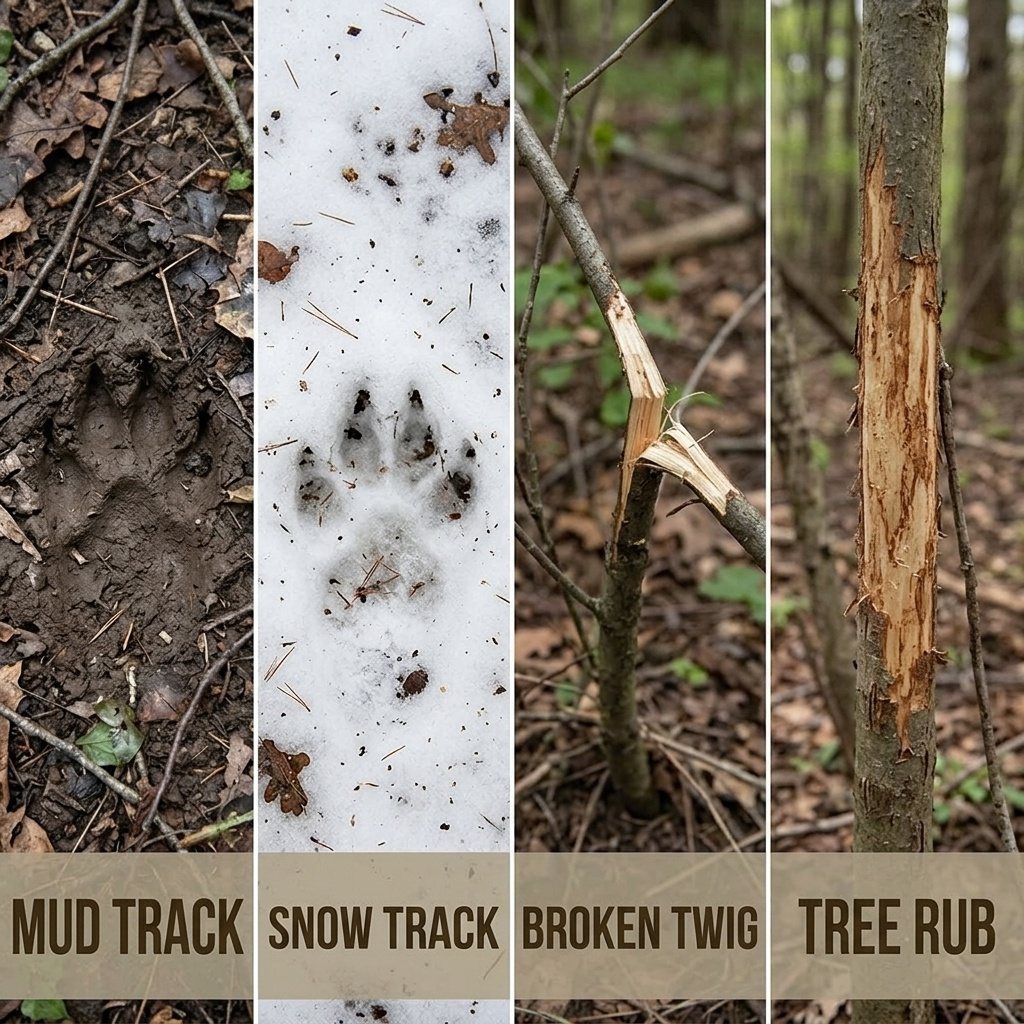
▶ Narrated lesson: watch it, or download the PowerPoint
Joe walks through this lesson, slide by slide, in about 14 minutes, ending with the 25-question test.
⬇ Download the PowerPoint ⬇ MP3 audio
The PowerPoint plays Joe's narration on every slide and moves on by itself.
✎ Take the test and earn your certificate: 25 questions on tracks and sign
These are the same 25 questions at the end of the video and the PowerPoint. Pick an answer for each, then press Check my answers. Score 80% or better (20 of 25) to print your certificate.
1. Why scout before you set traps?
2. What is a pinch point?
3. Which track looks like a small human hand with five long toes?
4. Which animal's hind foot has a thumb that points out to the side?
5. How can you tell a coyote track from a cat track?
6. About how long is a coyote track?
7. Which animal leaves a big webbed hind-foot track?
8. Which small track often has a tail drag line?
9. What is a raccoon latrine?
10. Why should you never touch raccoon droppings?
11. Where do coyotes and foxes often leave scat?
12. Where do mink and otter leave scat?
13. Which travel routes do coyotes like?
14. Which of these is a crossing that concentrates animals?
15. What do beaver and muskrat wear into the bank?
16. Why check rules before trapping near dens?
17. What do chewed and felled trees tell you?
18. Corn ears stripped on the stalk usually mean which animal?
19. Holes in pond dams and banks are often made by which animal?
20. Noises in the attic at night and ripped shingles usually mean?
21. When is the best time to scout for tracks?
22. What should you do with every good spot you find?
23. What do trail cameras show?
24. Why check trail cameras carefully?
25. What should you get before putting a trail camera on someone's land?
Why scouting matters
- A trap only works where the animal walks
- Animals use the same trails, crossings and dens
- Fresh sign tells you an animal is there now
- Scout before the season opens
- Funnels and pinch points concentrate animals
Droppings (scat)
- Raccoon: piles at latrines on logs, ledges and barn rafters
- Coyote and fox: on trails and crossings, often full of hair
- Mink and otter: on rocks and logs at the water's edge
- Muskrat: small pellets on logs and floating mats
- Never touch raccoon droppings: they can carry roundworm eggs
Trails, runs and crossings
- Coyotes and foxes use ranch roads, cow trails and field edges
- Raccoons follow creek banks and fence rows
- Beaver and muskrat make runs and slides in and out of water
- Crossings: culverts, fallen logs, shallow riffles
- Look where trails pinch down to a narrow spot
Dens, burrows and lodges
- Raccoons den in hollow trees, culverts, barns and attics
- Foxes and coyotes dig dens in spring for pups
- Beaver build lodges and bank dens; muskrats build push-ups and houses
- Groundhogs dig burrows with a dirt mound out front
- Many states ban disturbing dens: check the rules
Damage tells a story
- Chewed and felled trees: beaver
- Corn ears stripped on the stalk: raccoons
- Chickens missing with no trace: often foxes or coyotes
- Chickens killed with heads missing: often raccoons or owls
- Holes in pond dams and banks: muskrats
- Ripped shingles and attic noises at night: raccoons
Trail cameras help
- Show what animal is using a trail, and when
- Place one at a crossing, culvert or den
- Check them without leaving much scent
- Get landowner permission; follow local camera rules
More guides
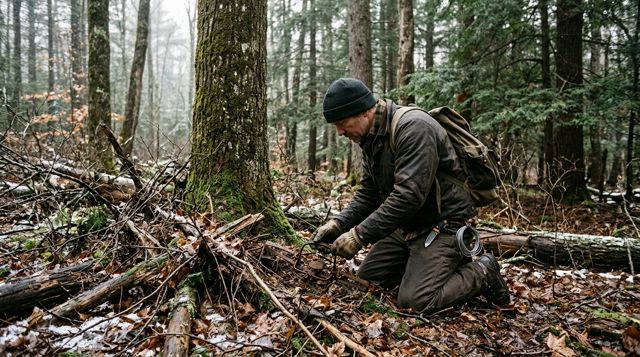
Trapping 101
Start here: what trapping is, the laws, the animals and your first steps.
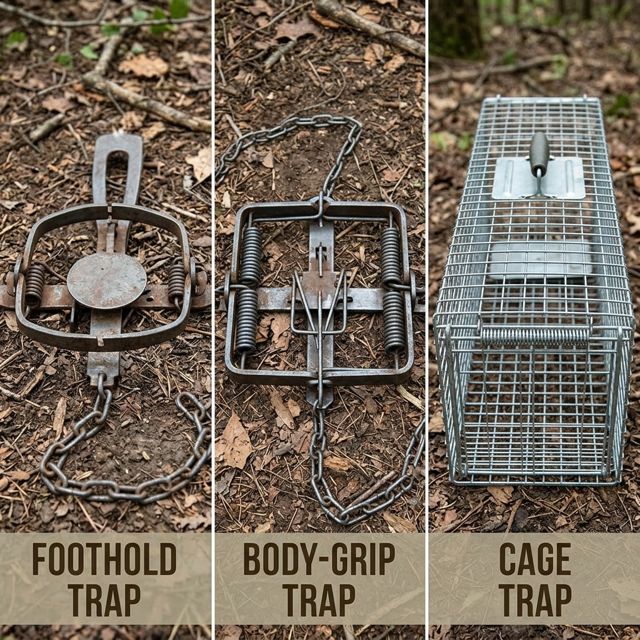
Types of traps
Cage, foothold, body-grip, cable restraint and dog-proof traps, and which to use.
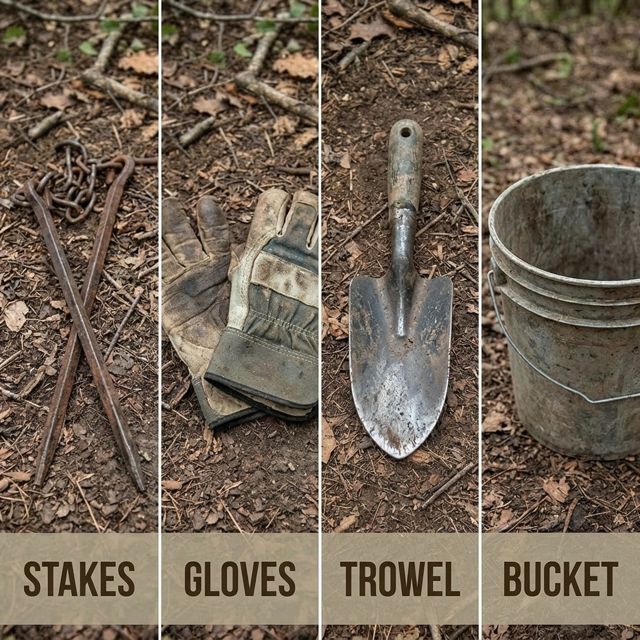
Trapping gear and tools
Stakes, gloves, tools, baits, lures and what a beginner really needs.
Nuisance animals around the home
Raccoons in the attic, skunks under the porch: keep them out or live-trap them.
Rats and mice
Seal them out, set snap traps the right way, and clean up safely.
Trapping safety and pets
Diseases, water and ice, avoiding pets, and how to release a dog from a trap.
Sources
Checked November 25, 2026.