Rats and mice: trapping them in the house, barn and shop
Mice and rats eat and foul feed, chew wires and spread disease. How to tell which one you have, seal them out, set snap and electronic traps the right way, and clean up safely.
▶ Narrated lesson: watch it, or download the PowerPoint
Joe walks through this lesson, slide by slide, in about 14 minutes, ending with the 25-question test.
⬇ Download the PowerPoint ⬇ MP3 audio
The PowerPoint plays Joe's narration on every slide and moves on by itself.
✎ Take the test and earn your certificate: 25 questions on rats and mice
These are the same 25 questions at the end of the video and the PowerPoint. Pick an answer for each, then press Check my answers. Score 80% or better (20 of 25) to print your certificate.
1. About how long are house mouse droppings?
2. Which rodent has a white belly and feet and is common in rural sheds?
3. Which rat is slimmer, with a long tail, and climbs into attics?
4. A mouse can fit through a hole about the size of what?
5. Which material should you use to seal rodent holes?
6. Where should you store feed and grain?
7. Where should snap traps go?
8. Which way should the trigger face?
9. About how far apart should mouse traps be where mice are active?
10. What's a good bait for snap traps?
11. Why pre-bait unset traps for rats?
12. Why use plenty of traps?
13. Why do many experts advise against glue traps?
14. What is a bait station?
15. Why can rodent poison harm owls, hawks and foxes?
16. If you use rodent poison, what must you follow?
17. What is the Poison Help number?
18. Which disease can deer mouse droppings carry?
19. Why never sweep or vacuum rodent droppings?
20. What should you do before cleaning a closed shed?
21. What bleach mix is used for cleanup?
22. How long should droppings soak before wiping?
23. When do rodents often move indoors?
24. Will barn cats alone solve a big rodent problem?
25. Why record your catches?
Mouse or rat?
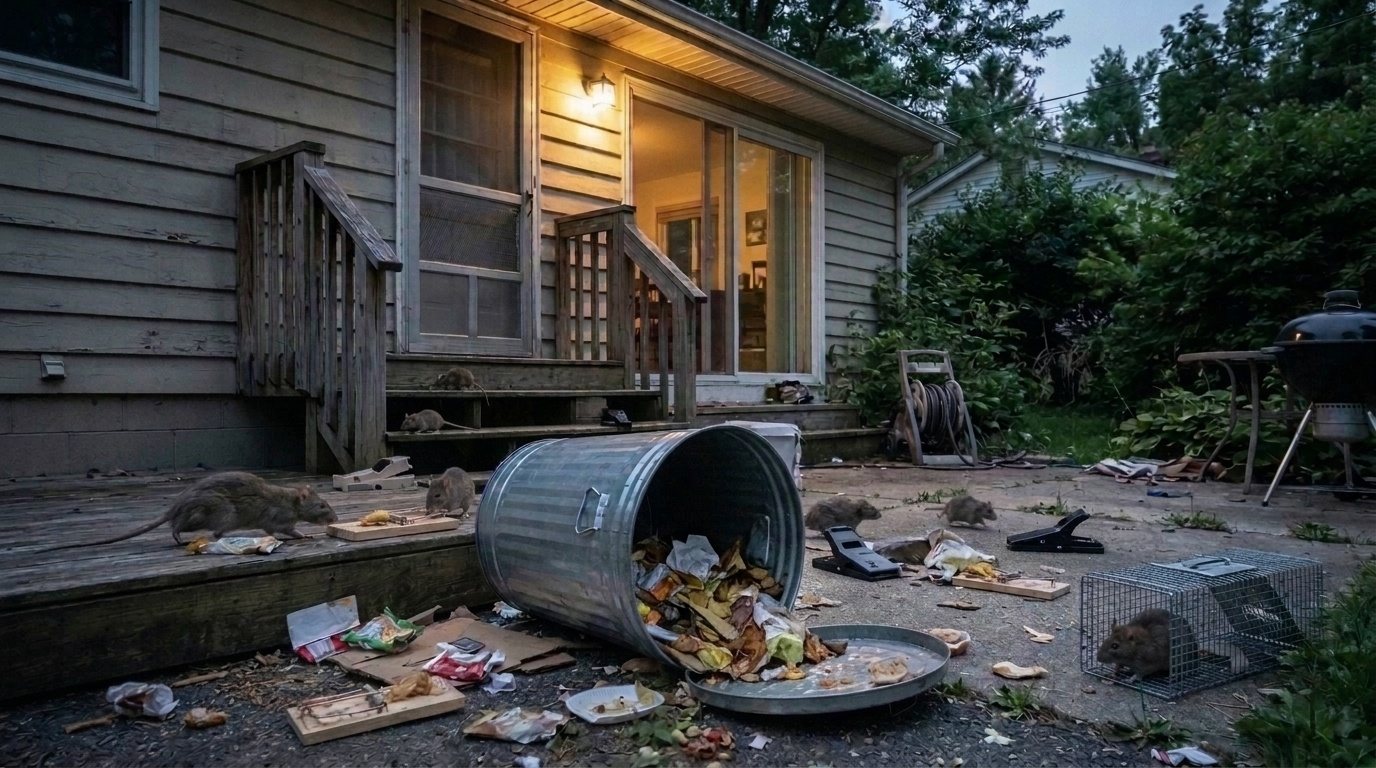
- House mouse: small, droppings about 1/4 inch, pointed ends
- Deer mouse: white belly and feet; common in rural sheds and cabins
- Norway rat: big and heavy, droppings about 3/4 inch, blunt
- Roof rat: slimmer, long tail, climbs into attics
- Mice fit through a hole the size of a dime; rats a quarter
- Gnawing, droppings, grease marks and noises at night
Seal them out
- Seal holes larger than 1/4 inch
- Steel wool plus caulk, hardware cloth, or metal flashing
- Check where pipes and wires enter, and door sweeps
- Store feed and food in metal or thick plastic bins
- Clear brush and junk piles away from buildings
- Keep wood piles off the ground and away from walls
Snap traps, set the right way
- Along walls, where they run, never in the open
- Trigger end toward the wall, or two traps back to back
- Mice: every 2 to 3 feet where active; rats: every 15 to 20 feet
- Bait with a pea-size dab of peanut butter
- Leave them unset for a few days with bait for wary rats
- Use plenty of traps: more traps, fewer days
Poison: think twice
- Rodent poison can kill pets, owls, hawks and foxes that eat poisoned rodents
- Poisoned rodents can die in walls and stink
- If used, only in locked bait stations, following the label exactly
- Keep the label and the poison control number: 1-800-222-1222
- Trapping and sealing are safer for farms with dogs and cats
Clean up safely: hantavirus
- Deer mouse droppings can carry hantavirus, which can kill
- Never sweep or vacuum droppings: that stirs up the virus
- Air out closed sheds and cabins for 30 minutes first
- Wear rubber gloves; spray droppings with bleach solution or disinfectant
- Soak 5 minutes, wipe up with paper towels, bag it
- Wash gloved hands, then bare hands
Keep it up
- Check and reset traps every day
- Keep a few traps set year-round in barns and shops
- Recheck seals each fall when rodents move indoors
- Barn cats help, but won't solve a big problem alone
- Record catches to see if the numbers are going down
More guides
Trapping 101
Start here: what trapping is, the laws, the animals and your first steps.
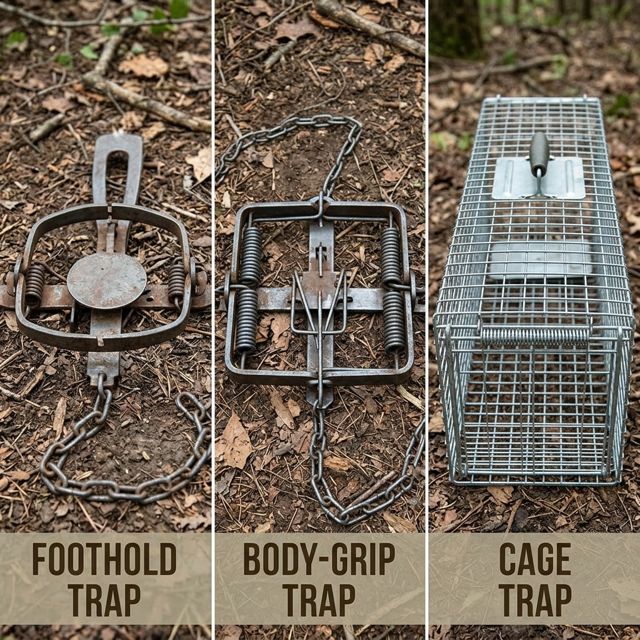
Types of traps
Cage, foothold, body-grip, cable restraint and dog-proof traps, and which to use.
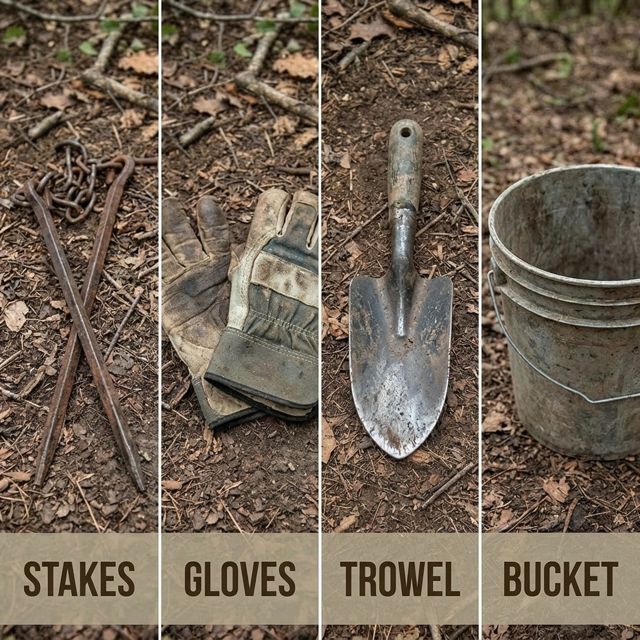
Trapping gear and tools
Stakes, gloves, tools, baits, lures and what a beginner really needs.
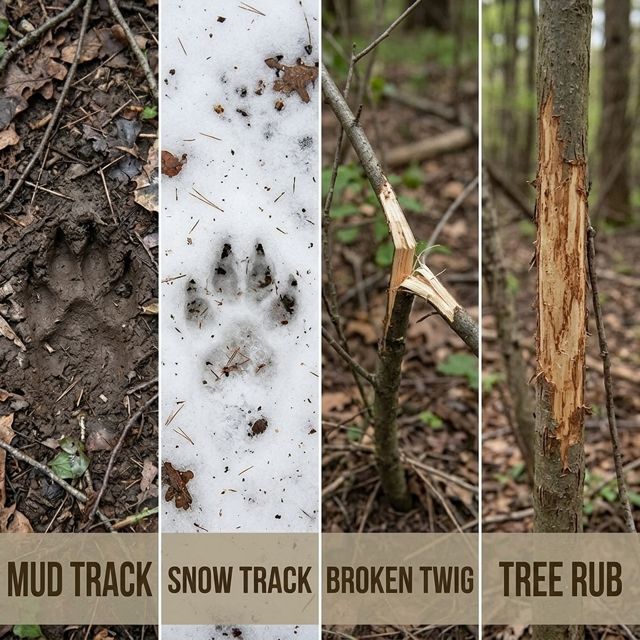
Tracks and sign
Read tracks, droppings, trails and dens to find the perfect spot.
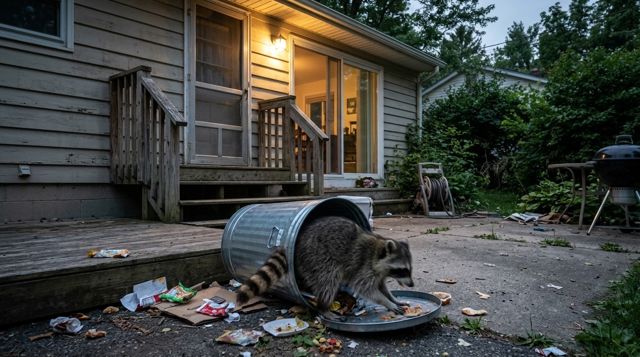
Nuisance animals around the home
Raccoons in the attic, skunks under the porch: keep them out or live-trap them.
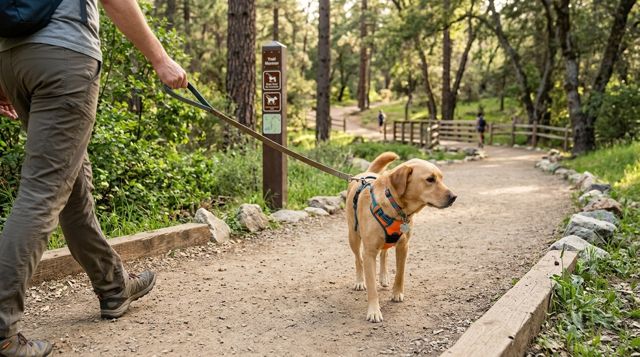
Trapping safety and pets
Diseases, water and ice, avoiding pets, and how to release a dog from a trap.
Sources
Checked November 25, 2026.