Trapping gear and tools: what you really need
Stakes, drags, gloves, a trowel and sifter, trap dye and wax, baits and lures, a pack basket and the clothes for the job. What a beginner needs, and what can wait.
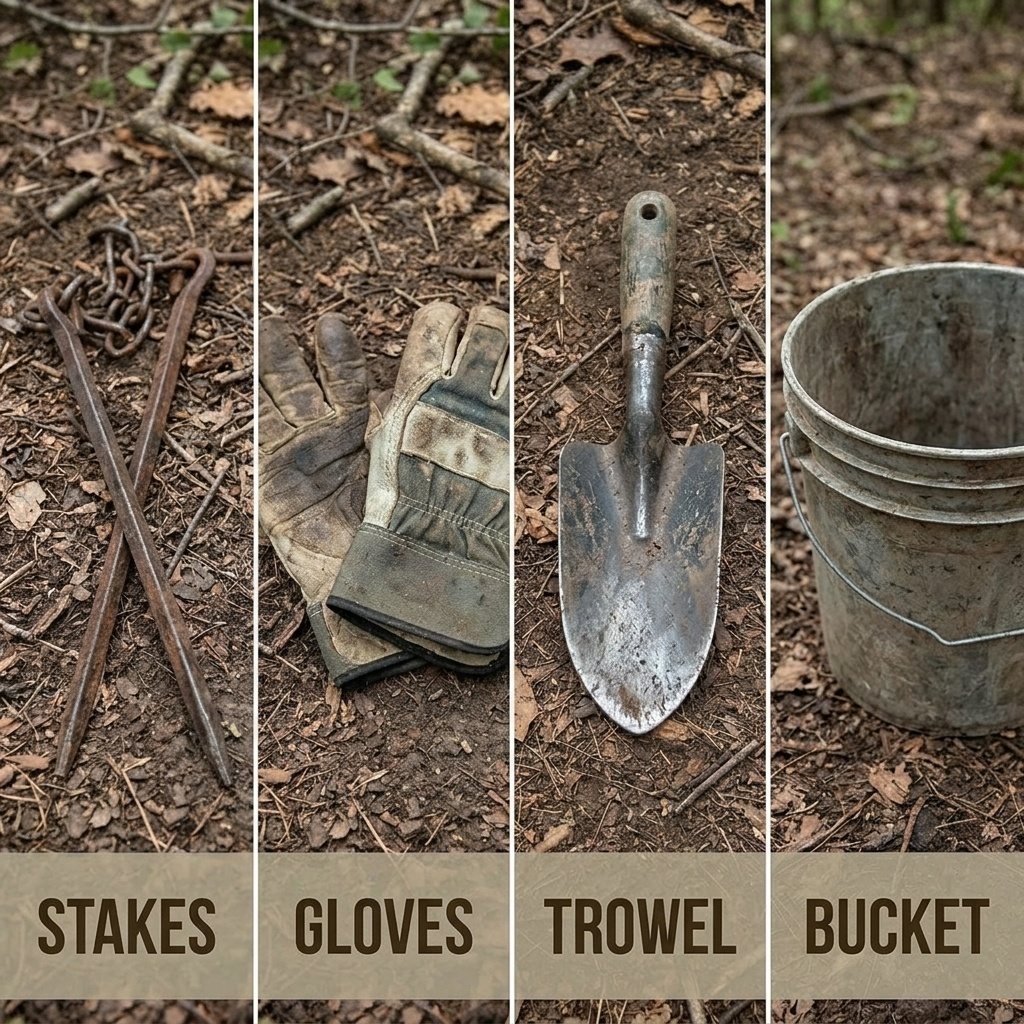
▶ Narrated lesson: watch it, or download the PowerPoint
Joe walks through this lesson, slide by slide, in about 14 minutes, ending with the 25-question test.
⬇ Download the PowerPoint ⬇ MP3 audio
The PowerPoint plays Joe's narration on every slide and moves on by itself.
✎ Take the test and earn your certificate: 25 questions on trapping gear and tools
These are the same 25 questions at the end of the video and the PowerPoint. Pick an answer for each, then press Check my answers. Score 80% or better (20 of 25) to print your certificate.
1. How many traps should a beginner start with?
2. Why buy quality traps and stakes?
3. Why must every trap be anchored?
4. About how long are stakes for raccoon and fox?
5. What do trappers use to anchor coyote traps deep?
6. What should you do in soft or sandy ground?
7. What do swivels on a trap chain do?
8. What is a sifter for?
9. What is bait?
10. What is lure?
11. Which bait is a good choice for raccoons and mink?
12. What does urine at a set tell an animal?
13. What should you do with new traps first?
14. Why wax traps?
15. Where should traps be stored?
16. Which animals need the most scent control?
17. What is dangerous for water trappers?
18. What should you wear during deer season?
19. What is a catch pole for?
20. Why cover a cage trap with a cloth?
21. What tool should you carry if you use cable restraints?
22. What should a beginner wait to buy?
23. Why keep a notebook or app on the trapline?
24. Why keep trapping tools away from food smells?
25. Is using live animals as bait legal?
Start small
- A dozen traps for one or two animals is plenty
- Buy quality: cheap traps and stakes fail
- Add gear as you learn what you need
- Buy from trapping suppliers, or at trappers association events
- Used gear from retired trappers is a good deal
Anchoring: stakes, cable stakes and drags
- A trap must be anchored so the animal can't pull free
- Rebar or steel stakes, 18 to 24 inches for raccoon and fox
- Cable earth anchors drive deep for coyotes
- Double-stake in soft ground
- Drags let some animals move to cover, where legal
- Swivels keep the chain from twisting
Baits and lures
- Bait is food: fish, meat, corn, fruit, marshmallows
- Lure is scent: gland lure, food lure, or a curiosity smell
- Urine signals another animal was there
- Use a little: a few drops of lure goes a long way
- Match bait to the animal: fish for raccoons and mink, meat for canines
- Check your state's rules on bait, like no live animals
Dye, wax and scent control
- New traps come oily: boil them clean first
- Dye them dark with logwood dye or walnut hulls
- Wax them, so they work smoothly and don't rust
- Store traps outside the house, away from smells
- Wear clean gloves and rubber boots on the line
- Water sets need less scent control; canine sets need the most
Clothes and footwear
- Dress in layers; trapping season is cold
- Hip boots or chest waders for water trapping
- Never wade in fast or deep water, or on thin ice
- Blaze orange during deer season
- Waterproof gloves, plus dry spares
Gear for live catches
- A catch pole, for live animals
- A cloth to cover a cage trap and calm the animal
- A pet release tool, or a cable cutter
- A legal way to dispatch, as your state allows
- Plastic bags and a tub for carrying fur
More guides
Trapping 101
Start here: what trapping is, the laws, the animals and your first steps.
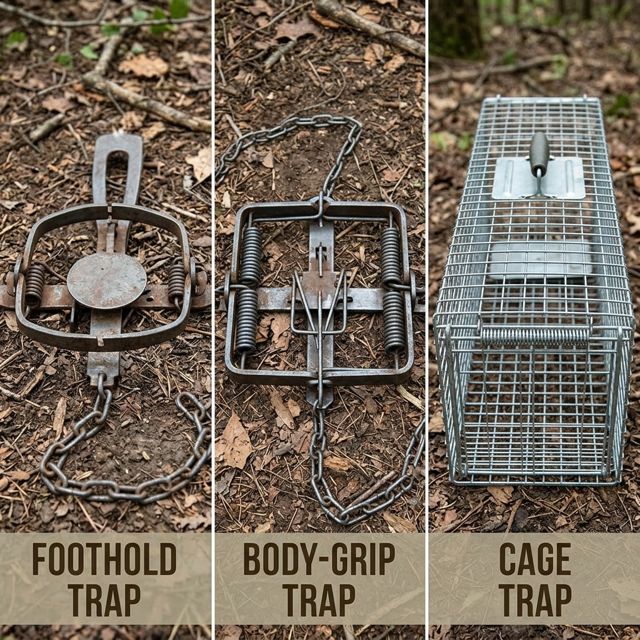
Types of traps
Cage, foothold, body-grip, cable restraint and dog-proof traps, and which to use.
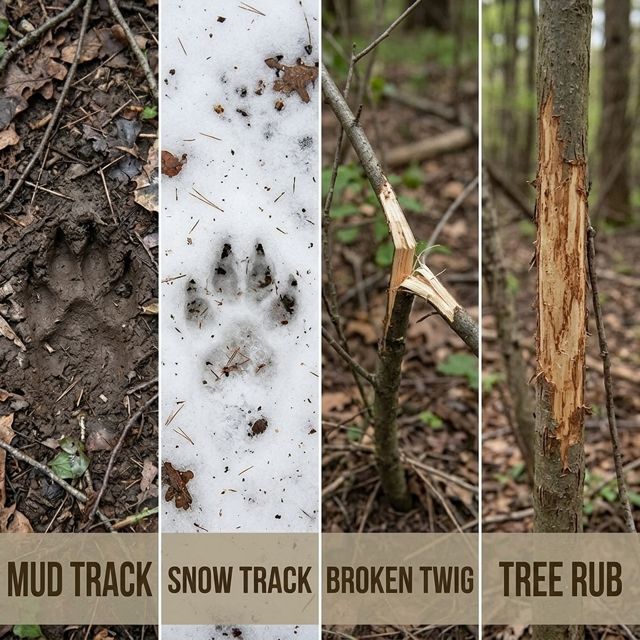
Tracks and sign
Read tracks, droppings, trails and dens to find the perfect spot.
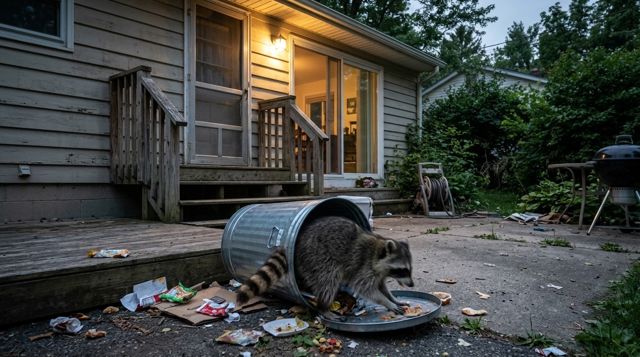
Nuisance animals around the home
Raccoons in the attic, skunks under the porch: keep them out or live-trap them.
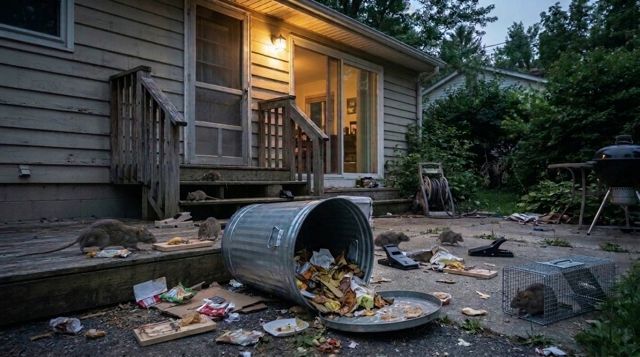
Rats and mice
Seal them out, set snap traps the right way, and clean up safely.
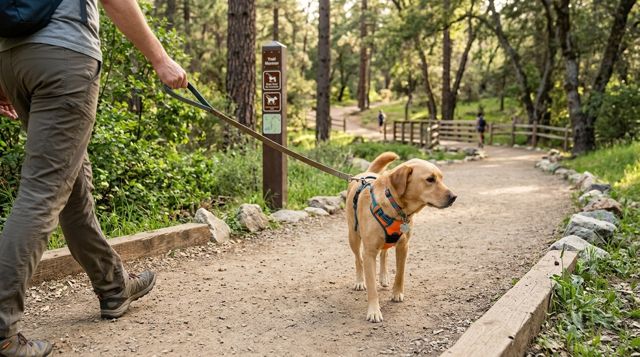
Trapping safety and pets
Diseases, water and ice, avoiding pets, and how to release a dog from a trap.
Sources
Checked November 25, 2026.